Wednesday, June 15, 2011

Garden Bloggers Bloom Day, June 2011

June is bringing forth her flowers in masses! Just look at Ceanothus thyrsiflorus 'Victoria'.

The bees are very proprietary about it, especially the large orange-haunched bumble bees who make it a challenge to photograph.

With Helianthemum 'Henfield Brilliant' at its feet it's not a shy, retiring color combo.


It's been such a cool, wet spring, it's hard to believe the Summer Solstice is next week - it still feels very spring-like here in Portland. The cool weather doesn't seem to be holding back flowering any longer, though.


I'm absolutely delighted the Trachycarpus fortunei palm is blooming for the first time - hard to photograph since the tree is still fairly short, but a great sign that it's happy.

Lewisia cotyledons have been blooming most of the month.

As have the Calla lilies. They are turning out to be a little on the thuggish side.

Tiny Lewisia rediviva has a bloom that overpowers its foliage.


It's in a trough with an equally minute no-name Dianthus. I love the Dianthus's ragged little petals.


Sedums are blooming nicely. This is Sedum spathufolium 'Cape Blanco', one of my favorites whether it's blooming or not.

I think this is Sedum kamtschaticum 'Variegatum'. The whole plant is the size of a dinner plate.


Another tiny gem, Geranium subcaulescens.

Eryngium planum 'Jade Frost'. This one sailed through winter.

Cistus x. obtusifolius.

On a suggestion from Grace of Gardening with Grace, I planted Nepeta x faasenii 'Walker's Low' instead of Agastache.  (Thank you, Grace and Scott, for supplying the correct name, validated by my finding the plant tag!)


Then I hedged my bets and ordered Agastache 'Acapulco Orange' from High Country Gardens, to replace the dead plant Grace so wisely mentioned didn't last long. I enjoyed my first 'Acapulco Orange' for three years -  the new one is still very small but it is blooming.


 In the Northwest Territory, the native Junegrass, Koeleria macrantha is making beautiful seedheads...


The streambank Lupine, Lupinus rivularis, is blooming...


And a volunteer foxglove is making a statement.


 Lilium columbianum is blooming, too. I love our native Tiger Lily.

And last, a sweet little (overdue - my fault for planting it late) Pagoda primrose, Primula vialii.


Bloom Day is hosted by Carol at May Dreams Gardens. Click over there for a look at what's blooming this beautiful June 15th in gardens across the nation and around the world.

Wednesday, May 18, 2011

A (really) brief visit to Seattle

The Mulchman had business in downtown Seattle this past Monday, so I rode up with him in the car. He was happy to have the company and the opportunity to use the HOV lane. I was happy to spend three hours walking around downtown Seattle.

My first stop was the new-ish Central Branch of the Seattle Public Library. This way-cool building was designed by Rem Koolhaus and opened about seven years ago.


Its exterior is very unexpected, with diagonal grids on the faces and a squeezed middle section on several sides that's much narrower than the top or bottom of the building. You can see how that affects the interior in the shot above.

The interior spaces are huge, yet the whole building is surprisingly friendly and useable. There's a coffee shop on the main level and light everywhere — enough for an interior garden.

I think these plants were in pots under all that sphagnum moss, but the overall effect was pretty pleasing.

The exterior landscaping was limited, although they had incorporated a runoff recovery system that stored rain to water parts of the grounds. But as I left the building I saw this striking variegated cedar(?) It looks like Cedrus deodora 'Cream Puff', but it was full-sized.

When I looked closer, I could see that the new growth was all white and the individual side needles were all dark green. I wonder if the color contrast disappears gradually through summer and fall.

After heading south to Pioneer Square, I walked north along the waterfront from there. It was bright, but there was a strong wind blowing and I was glad I had worn a jacket. Along a fenced area I found this lone Cistus flower in bloom.

Winter had obviously gone easy on this shrub and it was making a break for downtown through the railing.

My goal had been the Olympic Sculpture Park, but I stopped at Pier 64 when I realized it would take me a while to get back to our appointed meeting spot. An overpass there takes pedestrians over the rail lines and back into downtown. At the base of the overpass stairs was this small planting area with what looks to me like a Vireya Rhododendron.  I thought they would be too tender to live outdoors, even in this somewhat protected spot.

I loved the orange of its blossoms which complemented the mosaic on the stair walls beautifully.

As I approached the building where I'd meet the Mulchman and a colleague we were transporting home, I spotted this simple but effective contrast. The pink and green of the Hellebore and the black of the Mondo grass were set off nicely by the gray aggregate wall.

Three hours isn't much time in the city, but I would never miss an opportunity to explore our nearest big city neighbor. As it was, I got to cover a few miles on foot and I came home with a fresh perspective on a few plants and buildings in downtown Seattle.

Saturday, May 14, 2011

Learning Gardens at 60th and Duke


As an intern Master Gardener, part of my training includes 66 hours of hands-on work. Some of this work is "direct service",  like staffing the MG clinic office phone or answering questions at a farmers market, the zoo, etc. Some of the service hours are considered "indirect". To satisfy the indirect hours I have been spending a few hours each Tuesday morning working at the Learning Gardens located at 60th and Duke in southeast Portland.

It's a huge place with five greenhouses, and myriad activities including the two I'm involved with: the Multnomah County Master Gardener demonstration garden and the Lane Family Gardens program. Also happening here are Portland Public Schools programs, Portland State classes and even a greenhouse I'm told is used by Lan Su, the Chinese classical garden (I'd love to see inside but the walls are opaque.)

Here's a shot of the Multnomah MG demo garden. Veteran Master Gardeners planned the bed contents earlier this year, and one serves as the Garden Guru to direct each day's activities. They, and we interns, do all the tasks required to keep the garden growing and productive, including sowing, transplanting, watering, weeding, mowing etc.

In addition to the vegetable beds, there's a blueberry bed...

A rose bed...

And an herb bed, complete with scarecrow.


Right now, there's lots of lettuce and cool weather crop activity.

Pok Choy is doing nicely after being transplanted out about three weeks ago.


Featured for the first time this year is a Square Foot Garden. This is a system for intensive and successive planting in a very small area. The raised bed has been divided into square foot sections and a specific number of seeds or seedlings are planted in each section.

In just three weeks, the spinach, pok choy and lettuce seedlings have filled in, and the seeded radishes and carrots are sprouting. The rear third of the bed is reserved for something to be grown up a trellis later. This productive bed is only 8x3 feet, so it's a method that can work for people with only a small amount of land to garden.

To go with the Square Foot bed, two tomatoes are planted in large plastic containers and are keeping warm with a Wall-o-Water.

Doesn't this one look cozy?

Rubarb is one of the few perennials in the vegetable garden beds.

Potatoes are hilled up inside an old horizontal blind - there's a shoestring budget here so there are lots of good re-use tips for the public.

Across the driveway from the demo garden are the Lane Family Gardens. This program provides a plot, seeds, seedlings, hand tools and expertise - all free - to help families in the community learn grow vegetables.  I've been matched with a young family as their mentor, but honestly, they have more recent experience than me in vegetable gardening, so I'm more of a cheering section and backup waterer, so far.

Here's the father of the family planting seeds in their plot a few weeks ago. I enjoyed his Roman reclining planting style.

We planted out lettuce seedlings, and four kinds of beans.


Yesterday, I checked on "our" plot. The lettuces are doing well, and lots of the seedlings have sprouted. We've been lucky with the rain and the family hasn't needed to do a lot of watering yet.


 Greenhouse 5 is the indoor base for both the activities I've been involved with, and the warmth inside has been a boon on these wet, cold Tuesday mornings.

Inside, what initially looks like chaos is actually efficiently managed by the various users.

Young basil seedlings wait for enough warmth to be planted out in the demonstration garden.

Plastic-covered seeds stay moist to encourage sprouting. Sometimes a heat mat is used to warm them just enough to germinate.

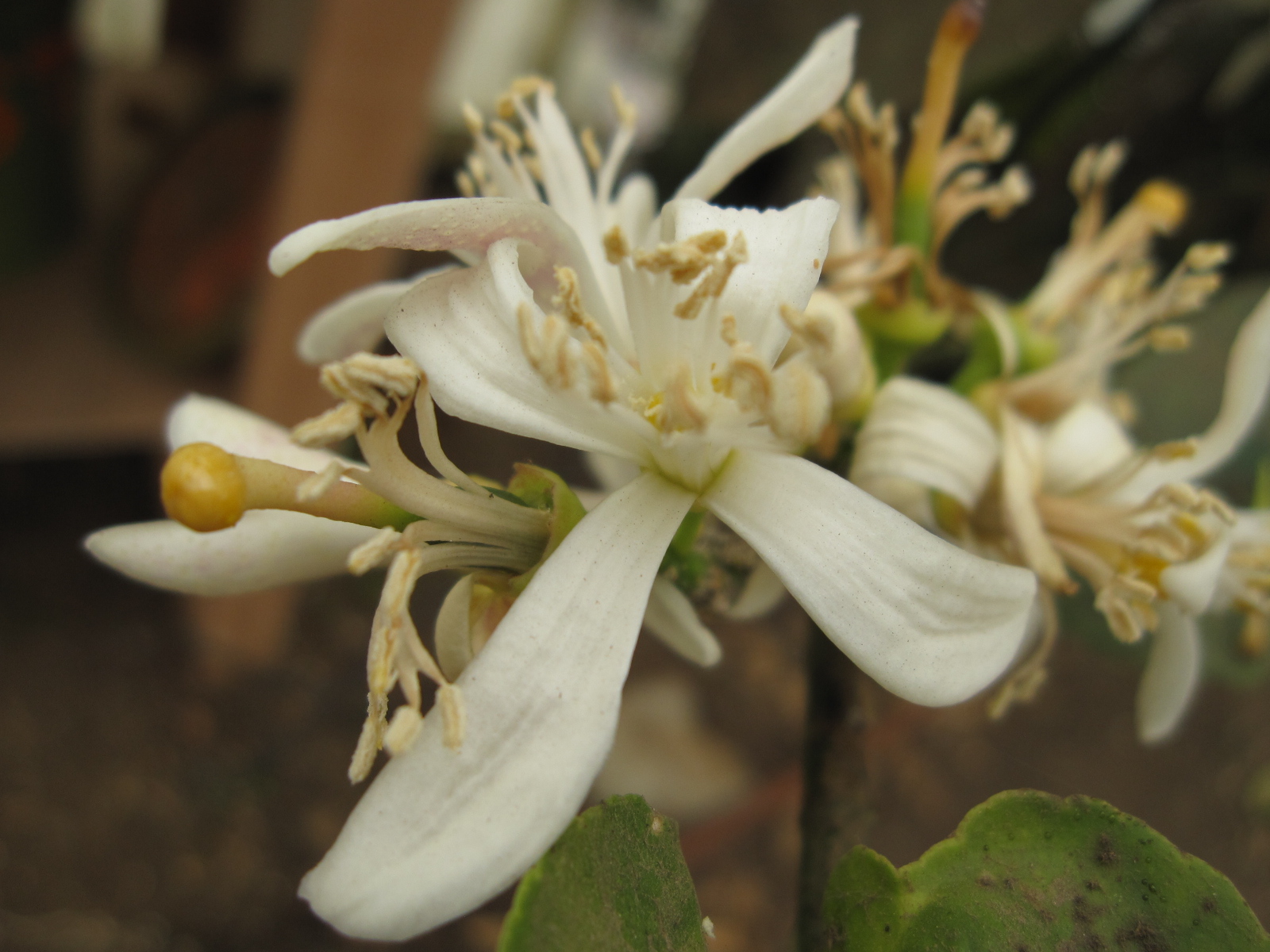
After the warmth of Greenhouse 5, the second thing that hits you when you enter is the intoxicating scent of lemons! This old lemon tree has obviously been here awhile and it smells heavenly this time of year.

Last year, the Multnomah County Master Gardener Demonstration Garden produced over 1,100 pounds of food that was donated to food banks and Lane school. The garden is open to the public and staffed by MGs each Saturday morning from 9 to noon. If you're interested in seeing what and how they grow veggies, or have a question for a Master Gardener, stop by and chat with them. Veteran MGs have a lot of the answers, and we interns are working hard to learn and catch up to them.